
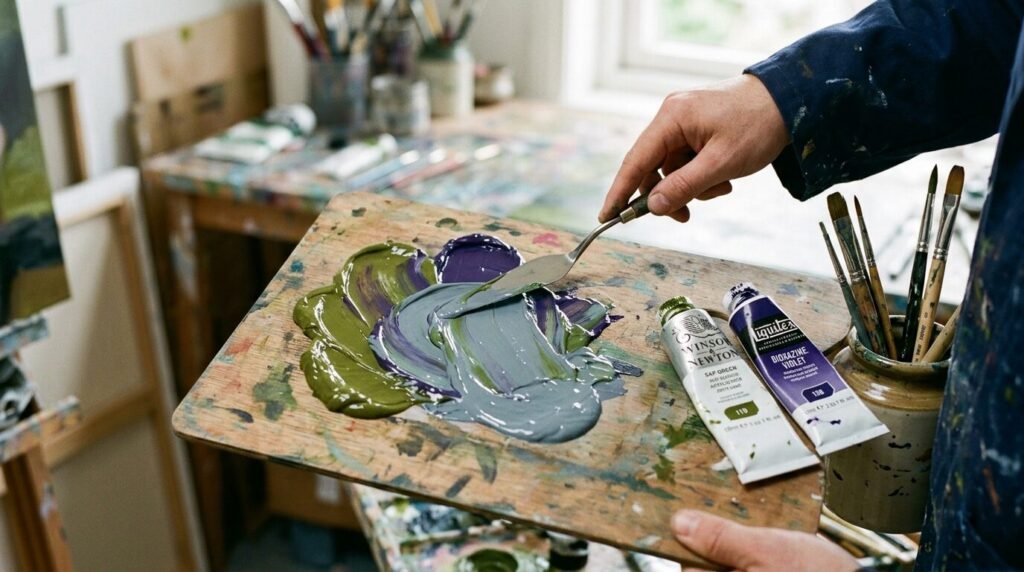
Green and purple are both rich, beautiful colours on their own. So it can be a real disappointment when you mix them together and end up with something grey and flat. If that has happened to you, you have not done anything wrong. It is simple colour theory, and once you understand it you can use this mix to create some of the most useful neutrals on your palette.
Quick answer: green and purple make a muted grey, often a slate blue-grey or a soft greyish brown. With more green the mix leans towards olive grey or deep sage. With more purple it leans towards charcoal, aubergine-grey or dusky blue. Add white and you get lovely soft greys like pewter, dove and mushroom.
Why Do Green and Purple Make Grey?
Green and purple are both secondary colours. Green is made from blue and yellow. Purple is made from red and blue. So when you mix them, you are mixing:
- Blue (from both colours, so there is a lot of it)
- Yellow (from the green)
- Red (from the purple)
All three primaries together always neutralise each other into grey, brown or near-black. And because both colours bring blue to the party, the result usually leans cool and bluish. That is why green and purple so often give that slate or stormy-sky grey.
It is closely related to what happens with true complementary pairs. Purple’s real opposite is yellow (read what purple and yellow make), and green’s opposite is red (see what red and green make). Green and purple are not exact opposites, but they are far enough apart to cancel each other out.
Try it instantly in our free Paint Colour Mixer and watch the colour shift as you change the balance.
Green and Purple Mixed: What You Get at Each Ratio
| Mix (green : purple) | Result | Useful for |
|---|---|---|
| 4 : 1 | Muted forest or sage green | Distant trees, eucalyptus leaves, shaded foliage |
| 2 : 1 | Olive grey | Stone, moss, dry bushland, khaki |
| 1 : 1 | Slate or blue-grey | Storm clouds, rocks, shadows, city scenes |
| 1 : 2 | Charcoal with a purple tint | Deep shadows, night skies, dark water |
| 1 : 4 | Dusky, greyed purple | Twilight, mauve flowers, distant mountains |
| Any mix + white | Pewter, dove grey, mushroom | Soft backgrounds, fog, interiors |
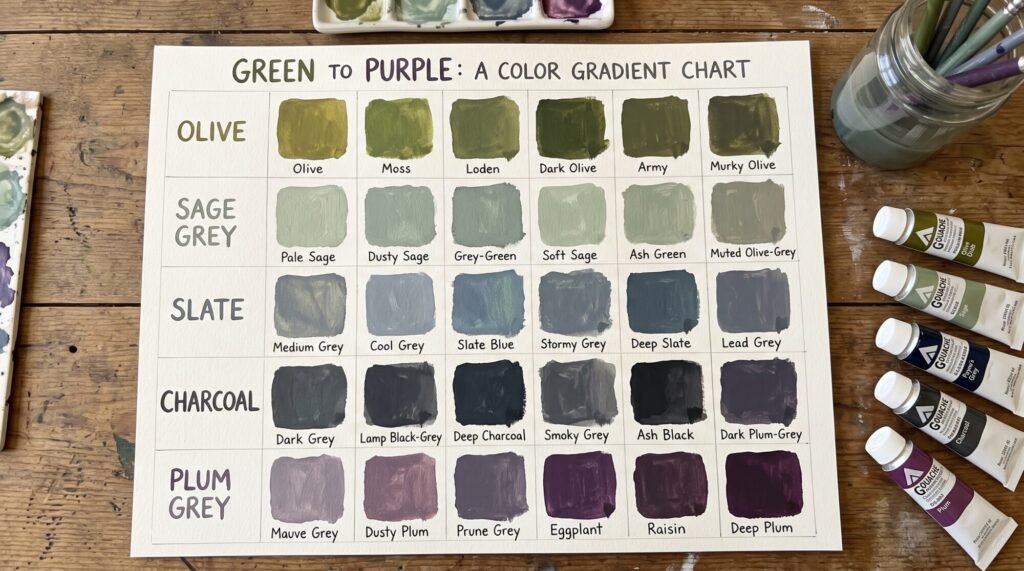
Purples such as dioxazine violet are very strong. Start with green and add purple in tiny amounts, or a single dab will take over the whole mix.
Why the Result Changes With Your Paints
Different greens and purples lean in different directions, and that decides whether you get grey, brown or something in between.
Yellowish greens
Sap green, olive green and yellow-green contain more yellow. Since yellow is purple’s true opposite, these greens neutralise purple more strongly. Expect warmer, brownish greys and olive tones.
Bluish greens
Phthalo green, viridian and emerald contain more blue. Mixed with purple they give cooler, blue-greys, deep teal-greys and slate.
Reddish purples vs bluish violets
A warm, reddish purple (like quinacridone violet) brings more red, which neutralises green and leans the mix brown. A cool, blue-violet (like ultramarine violet) brings more blue and pushes the mix towards blue-grey. Not sure which you have? My guide to violet vs purple explains how to tell.
How to Stop Green and Purple Turning Muddy
Grey is not the same as mud. Mud happens when a mix is accidental or overworked. A few habits keep your greys clean and intentional:
- Decide what you want first. A cool slate grey? A warm olive grey? Choose your green and purple to suit.
- Mix on the palette. Blend fully, then apply it in one confident stroke rather than stirring it on the canvas.
- Use only two colours plus white. Adding a third or fourth colour is the quickest route to mud.
- Check the value. Many “wrong” mixes are really just too light or too dark. Our Colour Value (Grayscale) Checker helps you see it.
- Keep your water clean. Dirty water quietly adds brown to everything.
How to Fix It if You Wanted a Bright Colour
Sometimes you mix green and purple hoping for something vivid. If that is the goal, here is how to rescue the situation:
- Want a bright teal or blue? Do not mix green with purple. Mix green with blue instead. Blue is a neighbour of green, so the mix stays clean.
- Want a vivid magenta or plum? Mix purple with red or pink instead of green.
- Want the two colours to look bright together? Keep them side by side rather than mixing them. Placed next to each other, green and purple create a rich, jewel-toned contrast.
- Already too grey? Add a touch of the colour you want to dominate, such as more pure green, rather than adding more of both.
Beautiful Ways to Use Green and Purple Greys
Once you see these greys as a tool, you will use them all the time:
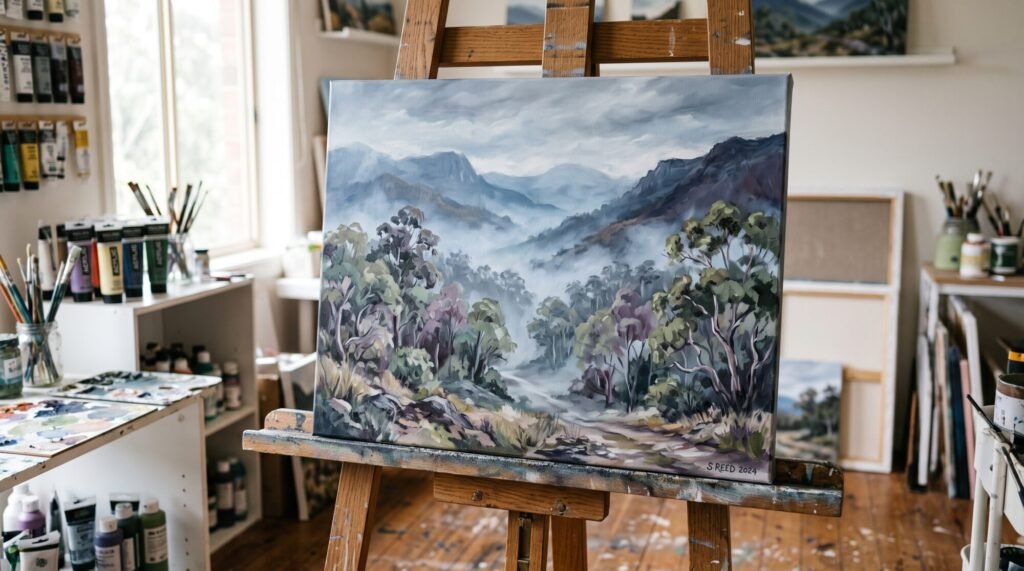
- Australian landscapes: the soft grey-greens of eucalyptus and saltbush are much easier to mix from green and a touch of purple than from green and black. The same muted tones show up in the hazy blue-grey of distant hills, like the Blue Mountains near Sydney.
- Skies and weather: storm clouds, rain and fog all live in this slate-grey family.
- Shadows: a green-purple grey makes shadows on foliage and flowers look natural and alive.
- Calm backgrounds: a soft pewter or sage-grey background is perfect behind calligraphy and portraits.
- Interiors and design: sage, slate and mauve-grey are popular, sophisticated colours for homes in both Australia and the US.
Create gentle, muted versions of any colour with our Muted & Desaturated Colour Generator.
Green and Purple Side by Side: A Jewel-Toned Colour Scheme
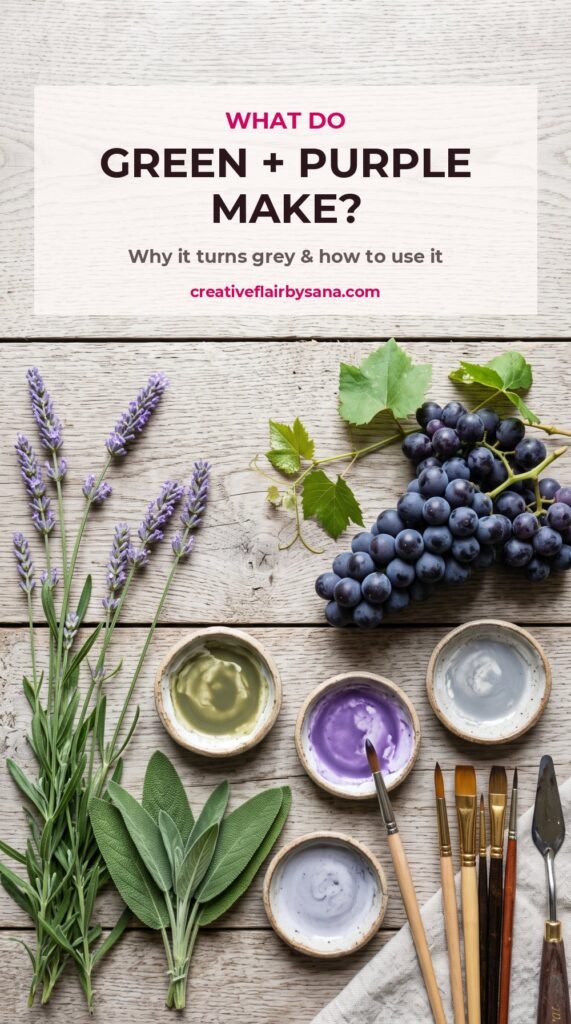
Mixed, green and purple go grey. Placed together, they are stunning. Think of lavender with its green stems, irises, purple grapes on the vine, or a peacock feather. This pair forms part of a triadic colour scheme (green, purple and orange), which gives a balanced but vibrant look.
- Emerald + amethyst: rich and luxurious.
- Sage + lavender: soft, calm and very popular for weddings and interiors.
- Olive + plum: moody and autumnal.
Build your own triadic palette with our Triadic Colour Generator, or find exact opposites with the Complementary Colour Finder.
A 10-Minute Green and Purple Mixing Exercise
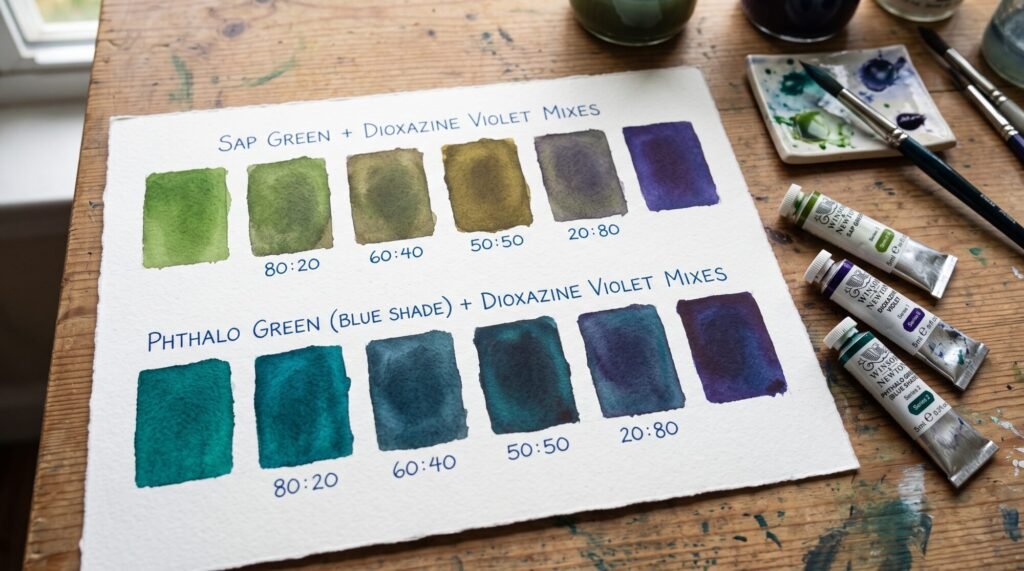
The fastest way to understand green and purple mixed together is to paint a small chart yourself. You only need two tubes, a scrap of paper and ten minutes.
- Draw six boxes in a row on watercolour paper or a primed card.
- Paint pure green in the first box and pure purple in the last one.
- Mix 80:20 (mostly green) for box two. You should see a muted olive.
- Mix 60:40 for box three. This is usually where a sage grey appears.
- Mix 50:50 for box four. Expect a slate or charcoal grey.
- Mix 20:80 (mostly purple) for box five. This gives a smoky plum grey.
Now repeat the row with a different green, such as phthalo instead of sap green. Put the two rows side by side and you will see how much the green you choose changes the grey. Label each swatch with the paint names and keep the chart near your easel. It saves a lot of guessing later.
If you would rather test ideas before opening any tubes, try our free Paint Colour Mixer to preview how two colours blend.
Green and Purple in Islamic Art and Calligraphy
Green and purple have a long, gentle history in Islamic decorative art. Deep greens appear in tilework, manuscript borders and mosque interiors, while plum and violet tones add richness behind gold lettering. The soft greys you get by mixing them make an elegant background for calligraphy, because they are calm enough to let gold or white letters stand out.
Try painting a muted sage-grey or plum-grey background, let it dry fully, then add your lettering in metallic gold. The contrast feels peaceful rather than loud, which suits verses and names like Bismillah beautifully. Our DIY Islamic Calligraphy Painting Kit is a lovely way to practise this, with everything ready to start.
Green and Purple Mixing: Frequently Asked Questions
What colour do green and purple make?
In paint, green and purple make a muted grey, often a slate blue-grey or a greyish brown. More green gives olive grey, more purple gives charcoal or dusky purple.
Do green and purple make brown?
They can, especially with a yellowish green (like sap green) and a reddish purple. With bluish greens and violets, the mix leans grey instead.
Are green and purple complementary colours?
Not exactly. Purple’s complement is yellow and green’s complement is red. Green and purple are two points of a triadic scheme, which is why they look striking together but neutralise when mixed.
What colour do green and purple make in light?
On screens, green light plus purple (red and blue) light contains all three light primaries, so the result is a very pale, almost white colour.
How do I make a nice grey from green and purple?
Mix roughly equal parts of a green and a purple, then add white to lighten it. Lean towards green for a warmer sage-grey, or towards purple for a cooler slate grey.
Final Thoughts
Green and purple make grey because together they contain all three primary colours. That might not be what you expected, but those slate, olive and pewter greys are some of the most useful, natural-looking colours you can mix. Choose your green and purple on purpose, mix fully on the palette, and you will have beautiful neutrals for skies, shadows and landscapes whenever you need them.
Ready to experiment? Try different combinations in our Paint Colour Mixer and explore our other free colour tools, or relax with a guided project like our DIY Islamic Calligraphy Painting Kit.
Have a mixing question? Message me on WhatsApp. I love seeing what you are painting. – Sana